
How Are Video Games Made? From the First Idea to a Finished Game
Discover how video games are created, from initial concepts and game design to programming, testing, and release. Explore the technologies, tools, and creative processes behind today's games.
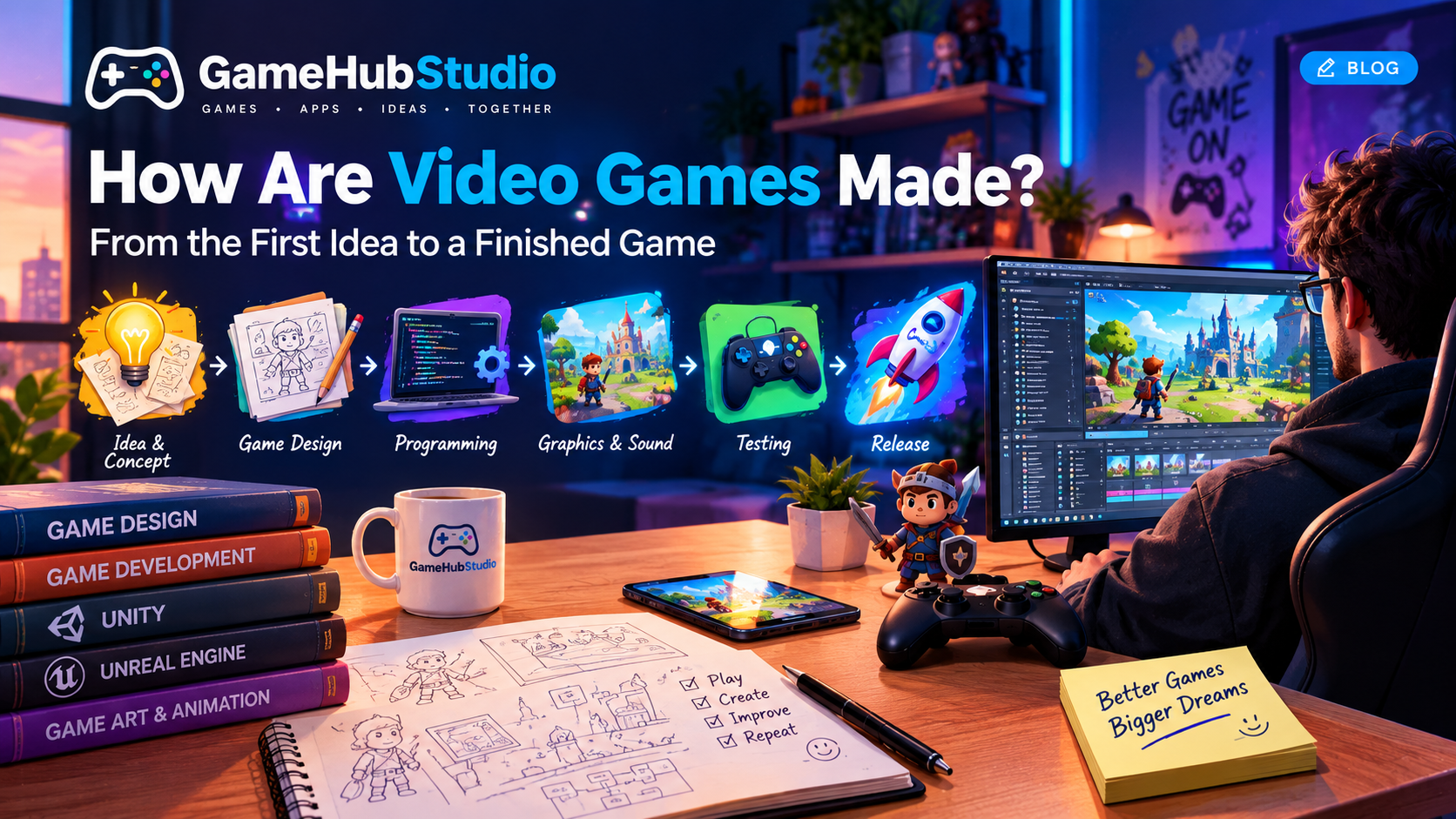
How Are Video Games Made? From the First Idea to a Finished Game
Behind every video game is an idea, a creative vision, and a development process that brings many different elements together. From simple mobile puzzle games to complex PC adventures, every project goes through several stages before players can enjoy it. But how exactly are games made, and what happens before a game reaches smartphones and computers?
- Creating the Idea and Designing the Game
Game development usually starts with an idea. Developers decide who the game is for, what makes it interesting, and how players will interact with it. The core gameplay mechanics, rules, levels, difficulty settings, and progression systems are planned during this stage.
A successful game idea does not have to be complicated. Sometimes, a simple mechanic combined with thoughtful design and balanced difficulty can create a highly enjoyable experience. The key is understanding what motivates players to keep playing.
- Choosing the Right Game Engine and Technology
Once the concept is defined, developers select the tools and technologies that best fit the project. Game engines such as Unity, Unreal Engine, and Godot help create graphics, animations, physics systems, and gameplay features. Depending on the project, developers may also use programming languages such as C++, Java, or Kotlin.
For mobile games, performance, different screen sizes, touch controls, and compatibility across devices are particularly important. Choosing the right technology can simplify development and help the game run more reliably.
- Programming and Building Gameplay Mechanics
Programming turns a game concept into something players can actually interact with. Character movement, buttons, scoring systems, levels, collisions, and win-or-lose conditions are implemented through code.
Multiplayer games introduce additional challenges. Developers need systems that connect players, synchronize game states, and manage online matches reliably. These features require careful planning and testing to provide a smooth experience.
- Graphics, Sound, and User Experience
A video game is much more than its source code. Visual design, animations, sound effects, music, and the user interface all influence how players experience a game.
Mobile games especially benefit from simple menus, intuitive controls, and clear instructions. Players should be able to understand how the game works without unnecessary confusion. A well-designed user experience makes it easier to get started and enjoy the gameplay.
- Testing and Fixing Bugs
Testing is an essential part of game development. Developers check how the game performs on different devices and under different conditions. They look for software bugs, performance issues, control problems, and unexpected behavior.
Testing also involves evaluating the overall gameplay experience. Difficulty levels, level length, progression systems, and game balance all need attention. The goal is to release a game that feels stable, fair, and enjoyable.
- Releasing the Game and Keeping It Updated
After testing, the game is prepared for release on its target platforms. Android games, for example, can be published through stores such as Google Play. A successful release also requires a clear app description, attractive screenshots, a recognizable icon, appropriate age ratings, and a privacy policy.
However, development does not end when a game is released. Player feedback can reveal problems and suggest improvements. Developers may release updates to fix bugs, improve performance, add new features, and make the overall experience better.
Opportunities for Independent Game Developers
Today, independent developers and small teams have more opportunities to create and publish their own games for players around the world. With the right tools, realistic planning, and consistent effort, it is possible to develop mobile games, puzzle games, strategy experiences, and online multiplayer projects.
Creating a successful game takes time, patience, and continuous learning. Your first project does not need to be perfect. Starting with a manageable idea, testing the core gameplay, and improving the experience based on feedback is often a practical way to move forward.
Explore Game Development with GameHubStudio
At GameHubStudio, we see video games as a combination of software engineering, design, and creativity. We aim to share insights into game development, explore emerging technologies, and provide a closer look at the work behind our own projects.
Whether you are new to game development or simply curious about gaming technology and creative ideas, follow GameHubStudio to explore how games are imagined, built, improved, and brought to players around the world.
Comments 0
No comments yet. Be the first to share your thoughts!